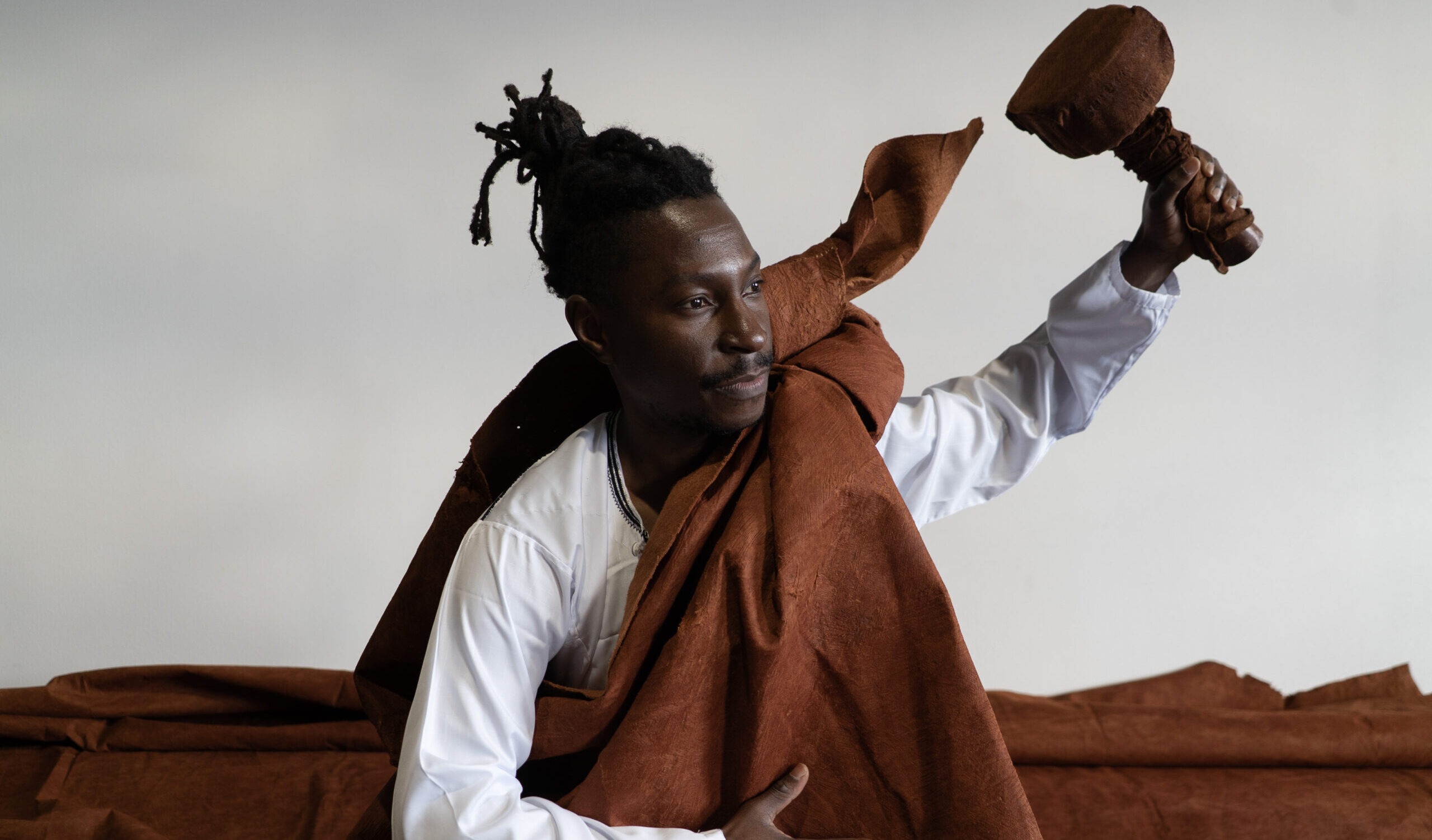

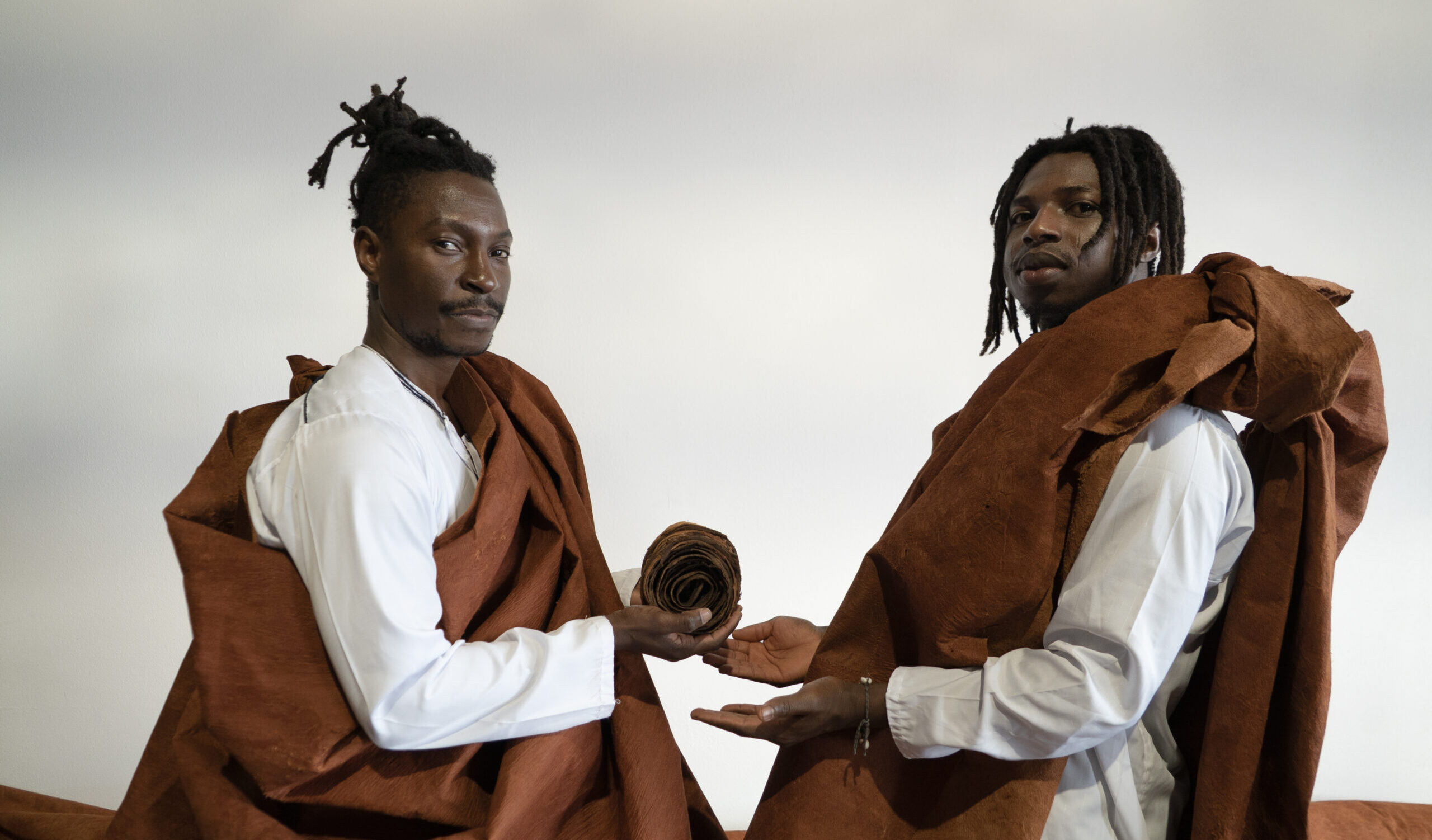
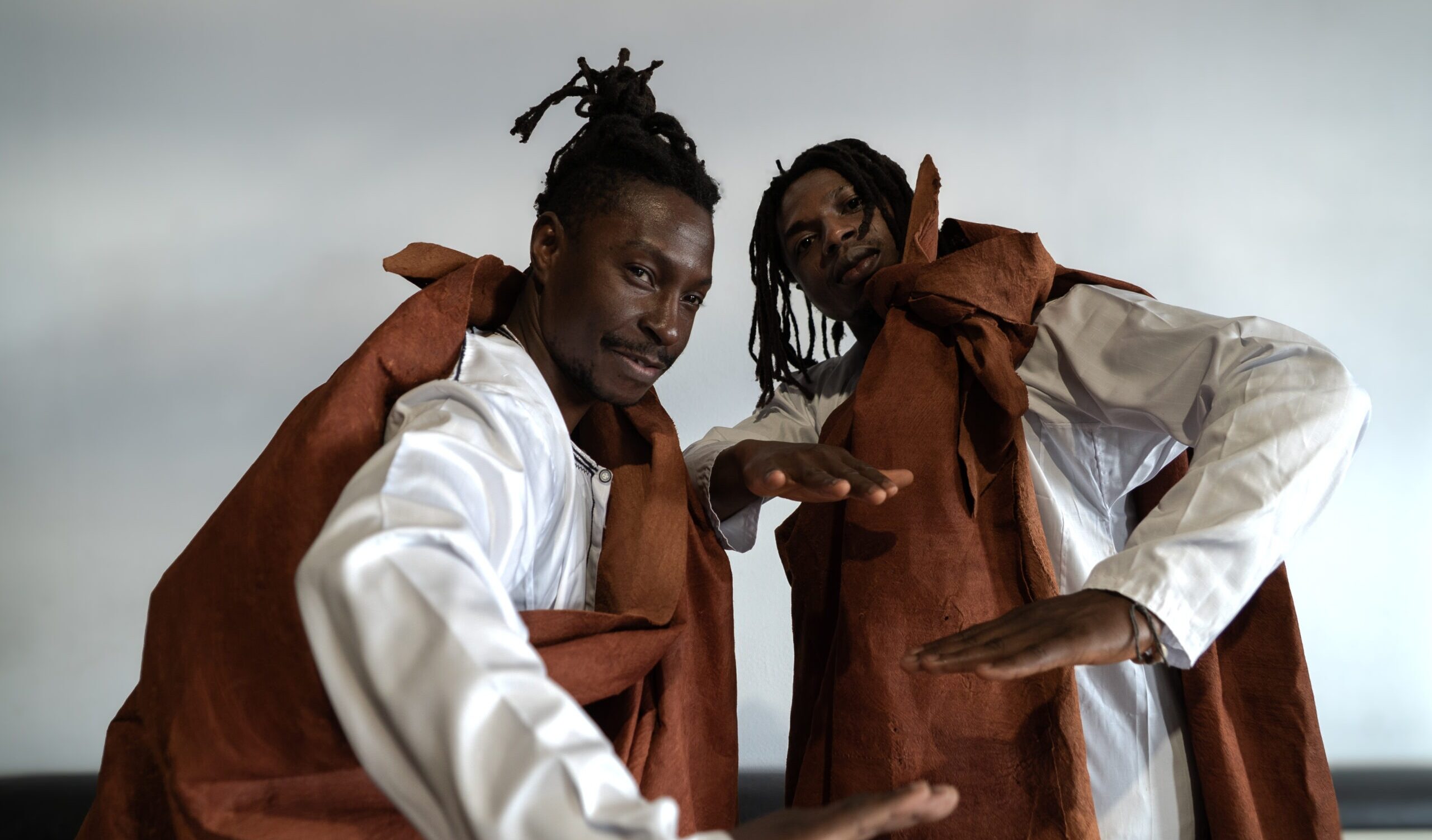




Twaliwo is an expression in Luganda, the language of the Buganda tribe—one of the largest ethnic groups in present-day Uganda—and essentially means “we once were.” Behind this lies the idea that there was once a time when people lived in harmony with one another. This time is remembered as being economically and spiritually balanced. It is now considered lost, and Twaliwo has become an expression for something that is past. One material and craft practice from a time that could be described as “Twaliwo” is the production of lubugo: bark cloth from Uganda. The practice is one of the oldest textile production methods in human history and uses the bark of the Mutuba fig tree. It dates back 12,000 years, is now part of humanity’s intangible cultural heritage, and is protected by UNESCO.
»Twaliwo« uses documentary dance theater to tell the story of bark cloth—and of the multitude of traditional dances and songs associated with this fabric.
Christoph Winkler and Robert Ssempijja have collaborated several times in recent years, deepening the artistic dialogue between Germany and Uganda. This collaboration finds its full expression in »Twaliwo«, with Ssempijja as co-choreographer alongside Winkler.

